


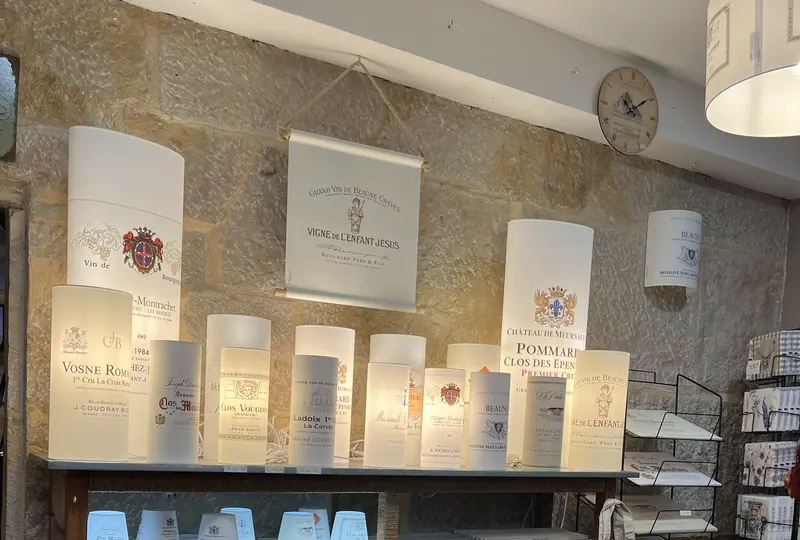
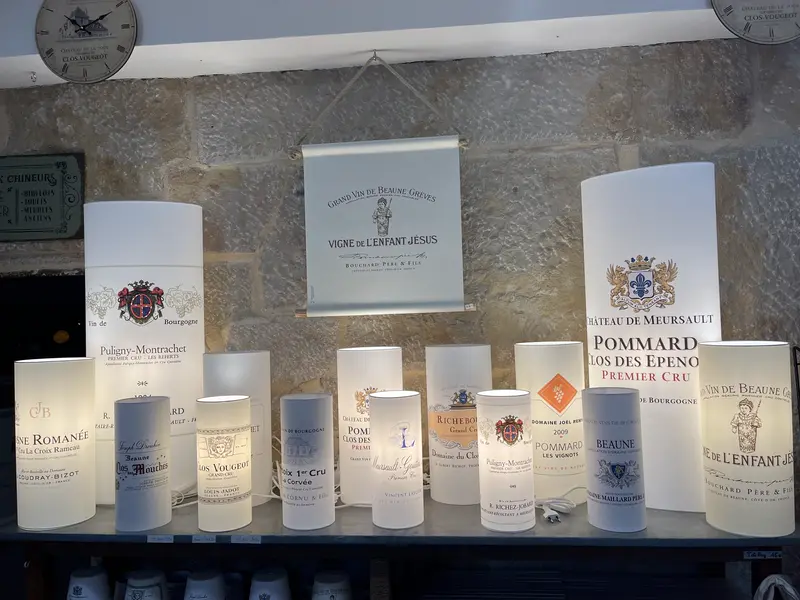
A Burgundy label reads like a map: it tells you where the wine comes from, where it stands in the hierarchy and who made it. Our lamps reproduce genuine labels of great wines; here we use them as examples to teach you how to decipher them, word by word.
The Four Levels of Appellation
In Burgundy, a wine first bears the name of its place of origin, and the more precise that place, the higher the appellation. There are four levels:
- Regional appellations: “Bourgogne,” “Bourgogne Hautes-Côtes de Nuits,” “Crémant de Bourgogne”… The grapes may come from anywhere within a whole area.
- Village appellations (or communal appellations): the name of a village, such as Beaune, Pommard, Volnay or Meursault. Our Beaune lamp reproduces a label at this level: the word BEAUNE, followed by “Appellation d'origine contrôlée.”
- Premiers Crus: the name of the village, the words Premier Cru (or 1er Cru) and, most often, the name of the climat. Example: Vosne-Romanée 1er Cru La Croix Rameau, on our Vosne-Romanée lamp.
- Grands Crus: the name of the climat alone, without the village, followed by the words Grand Cru. Examples: Clos Vougeot Grand Cru, Richebourg Grand Cru, Montrachet Grand Cru. Burgundy has 33 Grands Crus.
Remember the golden rule: on a Burgundy label, the fewer names there are, the more renowned the place the wine comes from. A Grand Cru does not need the name of its village. The only notable exception: the Grands Crus of Chablis, which are written “Chablis Grand Cru” followed by the name of the climat.
Reading a Label Step by Step
Let's take the label of the Louis Jadot Clos Vougeot, as it appears on our lamps:
- “Clos Vougeot,” in large capital letters: the name of the climat, and therefore of the appellation. It stands alone: this is a Grand Cru.
- “Grand Cru – Appellation contrôlée”: the level of the appellation and the guarantee of origin.
- “Élevé et mis en bouteilles par Louis Jadot, Beaune – France” (aged and bottled by Louis Jadot): the house that aged the wine (its maturing period before bottling) and bottled it.
- “Fondée en 1859” (founded in 1859): the year the house was founded. Careful, this is not a vintage!
The Wine Label Glossary, from A to Z
Appellation d'origine contrôlée (AOC) or protégée (AOP)
The guarantee that the wine comes from the delimited area it claims and that it complies with that area's production rules (grape varieties, yields, vine growing). The two terms, French and European, refer to the same protection. All our labels bear one of them.
Climat
A Burgundian word for a vineyard plot that has been precisely delimited and named for centuries, with its own soil, exposure and history. The Climats of the Burgundy vineyards (1,247 plots) have been a UNESCO World Heritage Site since 2015. A climat has nothing to do with the climate: the word refers to the place, not the weather.
Clos
A vineyard surrounded by walls, now or in the past. The most famous is the Clos de Vougeot, about fifty hectares enclosed by walls by the Cistercian monks. On our labels, you will also find the Clos des Mouches (Beaune), the Clos des Épenots (Pommard), the Clos des Maréchaudes (Aloxe-Corton) and the Clos des 60 Ouvrées (Volnay).
Côte de Nuits, Côte de Beaune
The two halves of the Côte-d'Or wine region. In the north, from Dijon to Nuits-Saint-Georges, the Côte de Nuits, the land of great reds (Clos Vougeot, Vosne-Romanée, Richebourg). In the south, around Beaune, the Côte de Beaune, birthplace of great reds (Pommard, Volnay, Corton) and of the most famous whites (Meursault, Corton-Charlemagne, Montrachet).
Cuvée
A wine made from a specific selection: a plot, a blend, sometimes a tribute. At the Hospices de Beaune, each cuvée bears the name of a benefactor who bequeathed their vines to the institution.
Domaine
A wine estate that farms its own vines and makes wine from its own grapes. Examples on our lamps: Domaine Maillard Père & Fils, Domaine Dubreuil-Fontaine, Domaine de la Pousse d'Or, J. Coudray-Bizot.
Élevage, “élevé par” (aged by)
Élevage is the period between the end of fermentation and bottling, spent in barrels or in tanks. “Élevé et mis en bouteille par” (aged and bottled by) refers to whoever carried out this stage: often a négociant house.
Grand Cru
The top of the Burgundy hierarchy. The name of the climat is written alone, followed by “Grand Cru”: Clos Vougeot, Richebourg, Corton-Charlemagne, Montrachet… Our lamps reproduce several of them, gathered on our page about the appellations on our labels.
“Grand vin de Bourgogne”
A traditional and very common phrase (“great wine of Burgundy”), but one that indicates no classification. It appears on village wines and Grands Crus alike: it is the appellation that tells you the level, not this phrase.
Lieu-dit
A place name recorded in the land registry. A village appellation wine may mention one, in smaller letters than the name of the village; that does not make it a Premier Cru.
Maison, négociant
A négociant house (maison de négoce) buys grapes, musts or wines to age and bottle them; the great Beaune houses often own vineyards of their own as well. Joseph Drouhin, Louis Jadot, Bouchard Père & Fils and Albert Bichot, whose labels we reproduce, are houses based in Beaune.
Millésime (vintage)
The year of the harvest. It is not mandatory and should not be confused with a founding date: “Depuis 1831” (since 1831) on the Albert Bichot label, or “Fondée en 1859” (founded in 1859) on Louis Jadot's, refer to the history of the house.
Mis en bouteille au domaine, à la propriété, au château (estate bottled)
These terms indicate that the wine was made and bottled by the estate that harvested the grapes. You will find them on our labels for Vosne-Romanée (J. Coudray-Bizot), Corton-Charlemagne (Dubreuil-Fontaine) and Volnay (“mis en bouteille au domaine” by the Pousse d'Or), as well as “mise au château” on our Clos Vougeot clock. “Mis en bouteille par” (bottled by) followed by the name of a house indicates a négociant.
Monopole
A climat owned in its entirety by a single owner. Two of our labels display it: Aloxe-Corton Premier Cru Clos des Maréchaudes (Domaine du Pavillon) and Volnay 1er Cru Clos des 60 Ouvrées (Domaine de la Pousse d'Or).
Premier Cru, 1er Cru
The second level of the hierarchy: the name of the village, the words Premier Cru and, most often, the name of the climat. The climat is sometimes joined to the village with a hyphen: Meursault-Perrières, Meursault-Gouttes d'Or. On the Clos des Mouches label, you can read “Appellation Beaune 1er Cru contrôlée.”
Propriétaire-récoltant (grower)
The winegrower who farms their own vines and harvests their own grapes, like the Domaine Maillard Père & Fils, “propriétaires récoltants à Chorey-lès-Beaune” (growers in Chorey-lès-Beaune) on our Beaune label.
Volume, alcohol content and mandatory information
A label must also state the volume (75 cl for a bottle, 1.5 l for a magnum: our Volnay label is that of a 1,500 ml magnum), the alcohol content, the name of the bottler, allergens (“contient des sulfites,” contains sulfites) and the pregnant woman pictogram. Since December 2023, the list of ingredients must also be made available, often via a QR code.
Frequently Asked Questions
What is the difference between a Premier Cru and a Grand Cru?
Premier Cru is the second level of the hierarchy: its label combines the name of the village, the words Premier Cru and often the name of the climat. Grand Cru is the highest level: its label bears only the name of the climat, followed by Grand Cru.
Why doesn't the village name appear on a Grand Cru?
Because in Burgundy, a Grand Cru is an appellation in its own right: the name of the climat is enough (Clos Vougeot, Richebourg, Montrachet). Only the Grands Crus of Chablis are an exception.
Is “Grand vin de Bourgogne” a classification?
No. It is a traditional phrase with no classification value. To find out a wine's level, read its appellation: regional, village, Premier Cru or Grand Cru.
What does “monopole” mean on a label?
That the climat belongs entirely to a single estate, which is therefore the only one to produce that wine. This is the case for the Clos des Maréchaudes of the Domaine du Pavillon and the Clos des 60 Ouvrées of the Pousse d'Or.
Our Labels, in a New Light
Village, Premier Cru, Grand Cru, monopole: our lamps reproduce genuine Burgundy labels, which glow from within once switched on. A way to keep in sight a label you now know how to read. Discover the story of each one on the page the Burgundy appellations on our lamps, or have the label of your choice reproduced on a personalized lamp.
Advice
Further reading


Beaune · Faubourg Madeleine
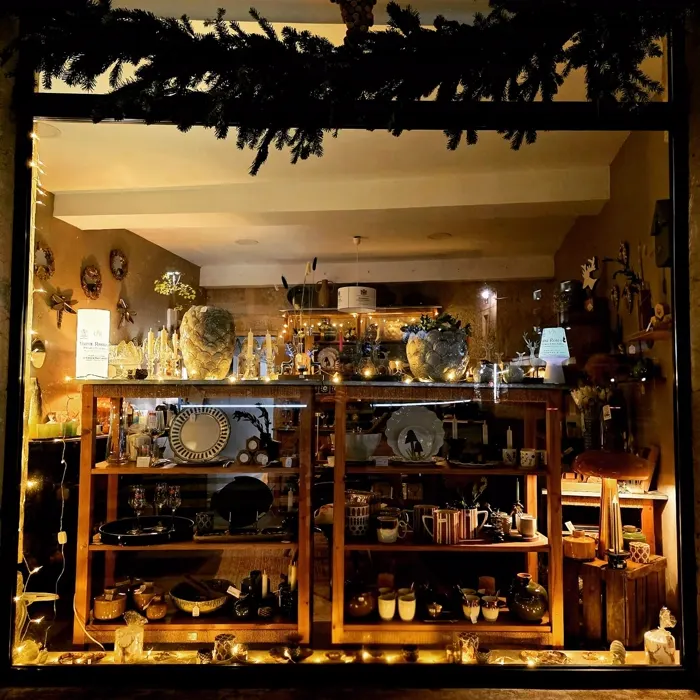
Come and see them lit up
All our wine label lamps are on display in the shop, along with our selection of home decor and tableware. Free in-store pickup for your orders.
Shop hours
- Tuesday → Saturday
- 10 h – 12 h 30 · 14 h – 19 h
- Sunday, Monday
- Closed
03 80 24 26 77